
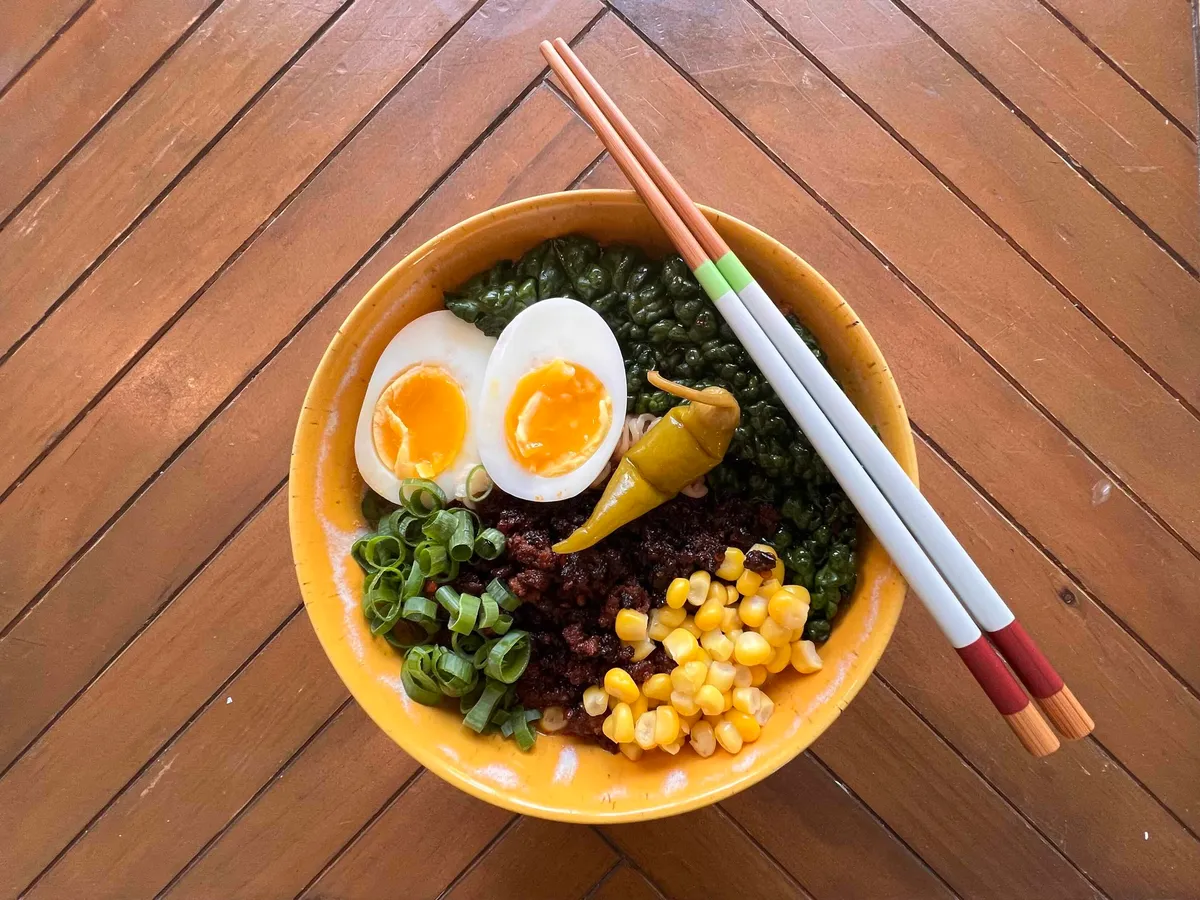
Classic Tonkotsu Ramen
Classic Fukuoka-style tonkotsu ramen — rich, milky pork bone broth built over 12 hours, thin straight noodles, chashu pork, and shio tare.
Ingredients
Tonkotsu broth
- 2 kg pork trotters, split by butcher
- 500 g pork neck bones
- 4 litres cold water
- 1 head garlic, halved crosswise
- 50 g fresh ginger, sliced
- 2 tbsp vegetable oil
Shio tare (salt seasoning)
- 60 ml sake
- 60 ml mirin
- 40 g fine sea salt
- 5 g kombu, roughly torn
Chashu pork belly
- 600 g skin-on pork belly, rolled and tied
- 100 ml soy sauce
- 50 ml mirin
- 50 ml sake
- 1 tbsp sugar
Toppings and assembly
- 400 g fresh thin ramen noodles
- 4 soft-boiled eggs, peeled and halved
- 4 sheets nori
- 4 spring onions (green part only), finely sliced
- Sesame seeds, to finish
- Beni shoga (pickled red ginger), to serve
Tonkotsu ramen is the ramen of Fukuoka, of Hakata, of the night-time food stalls called yatai that line the river. It is white and opaque, intensely porky, and deceptively simple in its flavour profile — there is nothing to hide behind, no complex spice blend, no dark miso to add depth. It is pork, water, and time.
A note on technique
The key to tonkotsu broth is temperature. Most ramen broths are coaxed at a low simmer to stay clear. Tonkotsu is the opposite: you boil it hard, deliberately. The vigorous boil forces the collagen and fat to emulsify into the liquid, creating the characteristic milky-white appearance and that thick, almost creamy mouthfeel.
This is a project recipe. Start it the evening before you want to eat it. The bones need time, and so do you.
The tare
Tare is the seasoning paste or liquid that sits at the bottom of the bowl before the broth is ladled in. For classic Hakata-style tonkotsu, a clean shio (salt) tare is traditional. Some shops use a soy tare. What you choose determines the final flavour note — shio is purer and lets the broth shine; soy adds umami depth.
On sourcing
Ask your butcher to split the trotters and crack the neck bones. More surface area means more gelatin extraction. If you can only find whole trotters, ask them to be halved longitudinally. In Japanese markets, you may find pre-cut genji (pig’s trotters) which are ideal.
For the noodles, look for thin, straight ramen noodles with low water content (low-hydration noodles). The firmness and bounce of a Hakata noodle is central to the experience — they hold up in the rich broth without going slack.
Method
Broth (start the day before)
-
Place the trotters and neck bones in a large stockpot. Cover with cold water and bring to a hard boil. Drain and rinse the bones thoroughly under cold running water, removing any dark residue. This blanching step is essential for a clean, white broth.
-
Return the cleaned bones to the pot. Add 4 litres of fresh cold water. Bring to a vigorous rolling boil — not a gentle simmer. The aggressive boil is what emulsifies the fat and collagen into the milky white broth. Maintain this boil, partially covered, for 8–10 hours, topping up with boiling water as needed to keep the bones submerged.
-
After 2 hours, add the garlic and ginger. Skim any foam that rises in the first hour but do not skim the fat — it is the broth.
-
Once the broth is deeply opaque and ivory-white, strain it through a fine-mesh sieve, pressing the solids. Discard solids. You should have around 1.5–2 litres of concentrated broth. Cool and refrigerate overnight.
Shio tare
-
Combine sake and mirin in a small saucepan. Bring to a simmer over medium heat and cook for 2 minutes to burn off the alcohol. Add the salt and kombu. Stir until the salt dissolves. Remove from heat and allow to cool completely, then remove the kombu. Store covered in the fridge.
Chashu pork belly
-
Combine soy sauce, mirin, sake and sugar in a small saucepan. Bring to a simmer, stir to dissolve the sugar, then remove from heat.
-
Sear the rolled pork belly in a little oil over high heat in a heavy-based pan until browned on all sides, about 6 minutes total.
-
Transfer to a tight-fitting container or zip-lock bag. Pour over the braising liquid. Braise in a 150°C oven for 2 hours, turning once, until tender but still sliceable. Alternatively, use the leftover liquid as the braising base in a Dutch oven on the stovetop, covered, on the lowest possible heat.
-
Remove the pork and cool completely before slicing. Reserve the braising liquid — it doubles as soy tare for seasoning if desired.
Assembly
-
Reheat the tonkotsu broth to a vigorous simmer. Season it with shio tare: start with 30–40 ml per serving and adjust to your palate. The tare is your seasoning — the broth itself is unsalted.
-
Cook the noodles according to the packet — fresh thin ramen noodles typically take 1–2 minutes in a large pot of unsalted boiling water. Drain well.
-
Warm 4 deep bowls. Place noodles in each bowl. Ladle 350–400 ml of hot seasoned broth over the noodles.
-
Top each bowl with 2–3 slices of chashu, a halved soft-boiled egg, a sheet of nori standing upright at the edge, a generous pinch of spring onions, and a sprinkle of sesame seeds. Serve beni shoga on the side.